AccessRP in ADGM: How to Register, Renew & Modify a Lease
Step-by-step: how AccessRP lease registration, renewal and modification work in ADGM — UAE Pass login, the 90-day renewal window, and the approval process.
What the FSRA requires for office premises in ADGM, what it leaves open, and how to choose between a desk and a private office.
FSRA office requirements are shorter than most firms expect, and vaguer. The Financial Services Regulatory Authority (FSRA), ADGM's financial services regulator, expects an ADGM firm to have a physical presence on Al Reem Island, and expects the premises to be suitable for the financial services the firm offers. It does not set a minimum floor area, a minimum headcount, or a list of approved building types.
That leaves a real decision for any firm preparing an application: how much space in ADGM is enough, and of what kind? This guide covers ADGM financial services premises as the FSRA describes them, where that guidance stops, and how an FSRA regulated firm's office in ADGM can be chosen between a desk, a private office, and a larger fit-out.
It is written for founders, compliance officers, and advisers preparing a Financial Services Permission application, as well as existing firms reviewing whether their current space still fits.
The FSRA's own Getting Started Guide sets out three points that matter for premises:
So the test is functional, not numerical. A firm with two senior people running an advisory business and a firm with a trading desk and a compliance team are judged against what each one actually does.
Authorisation runs in stages. An applicant first receives In-Principle Approval, then works through a list of conditions before the Financial Services Permission is granted. The Getting Started Guide lists those conditions as including share allocation, provision of share capital, staffing, incorporation or registration with ADGM's Registration Authority, obtaining a commercial licence, and fit-out of premises.
Two practical consequences follow. First, premises are normally secured after in-principle approval rather than before it, so a lease signed too early can lock in the wrong space. Second, the lease itself still has to be registered through ADGM's systems, which is covered step by step in our AccessRP lease registration guide.
The FSRA does not publish a checklist for suitability, so firms usually reason from the obligations a regulated business already carries. Four tend to drive the choice of space:
Regulated firms handle client identity documents, source-of-funds evidence, and transaction records. Open-plan seating means screens, calls, and paperwork are visible and audible to neighbours. Data handling duties follow the firm, not the building, as covered in our piece on how workspace type affects ADGM data protection obligations, but a lockable room makes those duties far easier to meet day to day.
Files, devices, and any physical records need somewhere that can be locked and that the firm controls. A shared desk with a locker may be enough for a very small advisory firm. A firm holding more material will usually want a door it controls.
Client onboarding, know-your-customer interviews, and compliance reviews are conversations that should not happen in a shared lounge. Access to a bookable meeting room helps, but a firm doing this work daily will often find a private office more practical than booking a room each time.
Regulated firms add staff, senior managers, and control functions as their business develops. Space that fits at authorisation can be too small a year later, so it helps to choose a provider where moving up a tier does not mean moving building.
| Option | Where it can work | Where it strains |
|---|---|---|
| Hot or dedicated desk | Very small firms, early-stage entities before full operations, individuals whose work is mostly off-site | Client confidentiality, secure records, regular onboarding meetings |
| Private office | Firms handling client data, running compliance functions, or hosting regular client meetings | Cost, if the team is one person with little client contact |
| Virtual office | Structures with no operating staff on site, such as certain holding vehicles | Any business expected to demonstrate real operations in ADGM |
The pattern is straightforward: the more client data, staff, and regulated activity sitting in the premises, the stronger the case for a private room. The cost and privacy trade-off is set out in more detail in our guide to private office vs coworking in ADGM.
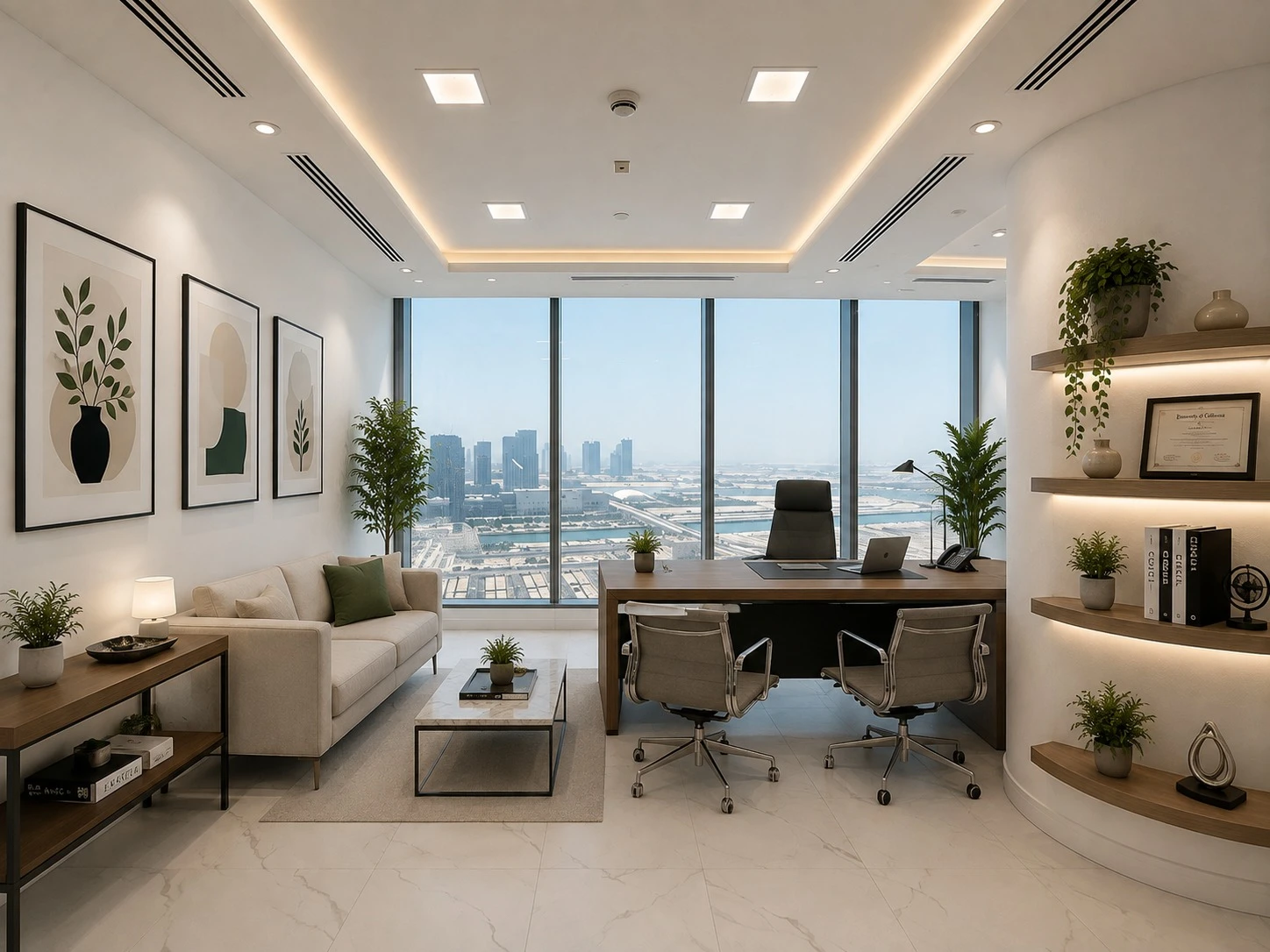
For firms that need a lockable room from the start, a furnished private office in ADGM at Addax Tower on Al Reem Island starts from AED 4,500 per month, and a dedicated or hot desk in Abu Dhabi Global Market starts from AED 1,150 and AED 1,000 respectively for businesses at an earlier stage. Al Reem Island sits inside ADGM's jurisdiction under Cabinet Resolution No. 41 of 2023, so an address there meets the island-based physical presence the FSRA describes.
"Best" depends on the firm, but a regulated business can test any provider against the same short list before committing:
Ask these questions in writing and keep the answers with the application file.
Whichever option you pick, be ready to explain it. For an FSRA regulated firm office ADGM applicants choose, a short written rationale tied to the business plan works better than a bare lease: how many people will sit there, what client information they handle, how often clients visit, and why the chosen space fits those facts. A one-person advisory firm choosing a desk and a twelve-person brokerage choosing a private office are both making defensible choices if the reasoning matches the activity.
The same reasoning helps later. When a firm adds staff or a new regulated activity, the rationale shows whether the space still fits or needs to change, and it saves time when renewals or reviews ask where and how the business operates.
The FSRA's published guidance requires a physical presence on Al Reem Island and premises suitable for the services offered. It does not say that every firm needs a private office. Whether a given space is suitable depends on the activities, and the firm should confirm its proposed premises with the FSRA.
No. The FSRA does not impose specific requirements on the size of premises.
No. The FSRA expects the firm to devote sufficient resources to carry on and control its regulated activities, but it does not set a minimum headcount.
Yes. The FSRA's guidance names Al Reem Island as a location for an ADGM firm's physical presence.
Fit-out of premises is one of the conditions listed after In-Principle Approval, so most firms settle their space once that approval is in hand and before the final permission is granted.
The FSRA asks for a physical presence in ADGM, premises suited to the services offered, and enough people to run the business properly. It sets no size or headcount rule, so the choice of space comes down to confidentiality, records, client contact, and growth. Smaller advisory firms can start with a desk; firms handling client data and compliance work every day are usually better served by a private room.
Aegis Coworking offers desk, private office, meeting room, and a registered ADGM address from Addax Tower on Al Reem Island. If you are planning an FSRA application and want to talk through which space fits your activities, get in touch before you sign anything.